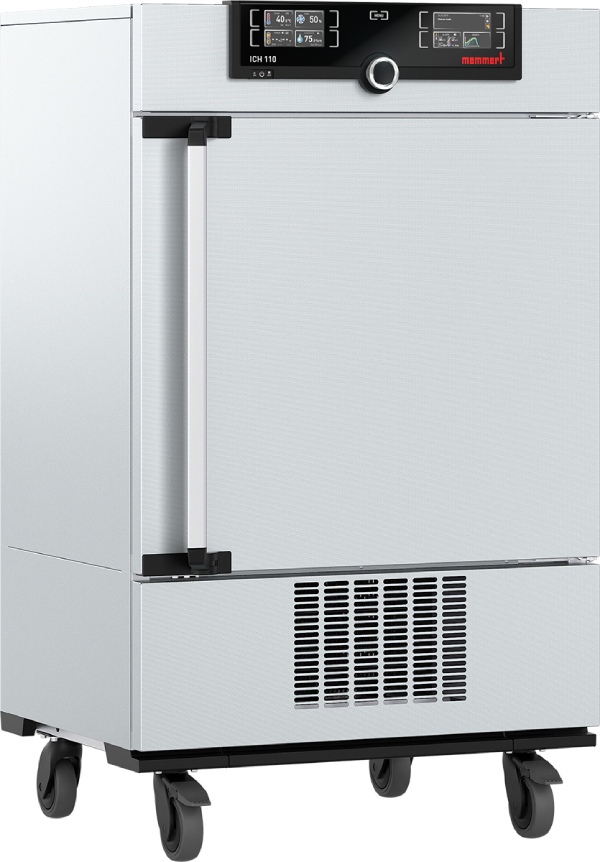
Stability Testing Chambers for Pharmaceutical Products in Egypt: ICH Guidelines & Practical Setup
In Egypt’s pharmaceutical market, investing in high‑quality stability testing chambers is essential for obtaining regulatory approval for finished products in local and export markets.
Alongside stability chambers, many QC and R&D labs rely on advanced analytical instruments such as polarimeters like the AUTOPOL I, AUTOPOL II, AUTOPOL III and AUTOPOL V Plus, as well as refractometry and density solutions such as the Rudolph Refractometer J 357 and the Rudolph Density Meter for product identity, concentration and purity testing.
Choosing the right stability chambers according to ICH stability guidelines helps pharma companies establish the real shelf life of their products and ensure consistent quality and efficacy throughout the storage period, while complementary tools like the Brookfield DVNext Rheometer, Brookfield DVNext Cone/Plate Rheometer, Brookfield RSO Rheometer, Brookfield RSX Cone Plate Rheometer and the Brookfield CTX Texture Analyzer support rheology and texture profiling of semi‑solids and liquids.
For incoming material identification and counterfeit screening, many facilities now integrate a Handheld Raman Analyzer into their pharmaceutical stability and quality programs, ensuring fast, non‑destructive verification of APIs and excipients.
Why Stability Testing Matters for Pharmaceutical Products
Stability testing is the foundation for determining the shelf life of pharmaceutical products under different temperature and humidity conditions over time.
By using reliable pharmaceutical stability chambers, companies in Egypt can monitor any changes in appearance, assay, degradation products or performance to guarantee patient safety until the end of the product’s life.
Regulatory expectations in Egypt and global markets
Regulatory authorities in Egypt follow the principles of ICH Q1A stability to ensure that submitted data reflects real storage conditions in the intended markets.
As a result, leading pharma manufacturers rely on ICH stability chambers specifically designed to run long‑term stability and accelerated stability studies in line with international standards.
Overview of ICH Stability Testing Guidelines (Q1A)
Key ICH Q1A(R2) concepts in simple terms
The ICH Q1A guideline defines how to design stability studies for finished pharmaceutical products, including long‑term, intermediate and accelerated stability studies.
Each study is based on a specific combination of temperature and relative humidity to simulate expected storage and distribution conditions for the medicine.
Typical stability conditions
Some of the most common conditions used in ICH stability testing are:
-
Long‑term stability: typically 25°C / 60% RH or 30°C / 65% RH, depending on climatic zone.
-
Accelerated stability: typically 40°C / 75% RH to stress the product and speed up degradation.
These profiles require stability chambers that can maintain highly accurate and uniform temperature and humidity for months or years without significant deviation.
Documentation & stability protocols
Any pharmaceutical stability study protocol should define sample quantities, pull points, acceptance criteria and analytical methods, supported by comprehensive data logging.
Selecting an ICH stability chamber with secure 21 CFR Part 11‑compliant data logging and factory‑supplied IQ/OQ/PQ documentation significantly simplifies audits and inspections.
Types of Stability and Climate Chambers Used in Pharma Labs
Constant climate chambers for long‑term studies
Constant climate chambers are typically used for long‑term stability studies that require very stable temperature and humidity over extended periods.
Solutions such as the Constant Climate Chamber HPPeco combine energy‑efficient Peltier technology with precise humidity control, making them ideal for ICH‑compliant stability programs.
ICH‑dedicated stability chambers for accelerated and stress tests
Many pharma labs prefer ICH stability chambers engineered directly around standard ICH conditions such as 40°C / 75% RH for accelerated or stress testing.
These systems are often combined with Humidity Chambers HCP and Universal Oven U or Vacuum Oven VO to support additional temperature and humidity profiles required for stress and photostability studies.
Walk‑in stability rooms vs reach‑in chambers
The choice between a walk‑in stability room and a reach‑in stability chamber depends on total sample volume, number of SKUs and project pipeline.
In Egypt, many medium‑sized pharma plants start with reach‑in systems like HPPeco climate chambers, combined with Ultralow‑Freezers ‑86°C for Lab and SMEG Vertical Freezers for Lab, then later scale up to walk‑in stability rooms as production and product portfolios grow.
How to Select the Right Stability Chamber for Your Pharma Lab in Egypt
Define test conditions and capacity
Your first step is to define which stability testing conditions you must support (for example 25°C/60% RH, 30°C/65% RH, 40°C/75% RH) and estimate the number of samples per study.
This will guide you in choosing the correct size and number of pharmaceutical stability chambers to cover current and future products while leaving enough space for complementary equipment such as Tablet Disintegration Testers (DTG‑Series), Tablet Dissolution Testers (DIS‑Series), Tablet Hardness Testers and Tablet Friability Testers.
Regulatory, data logging and validation requirements
To ensure full compliance, your system should provide:
-
Robust digital data logging with user management and audit trails.
-
Complete IQ/OQ/PQ packages from the manufacturer to support GMP equipment qualification.
Partnering with a reputable ICH climate chamber manufacturer and an experienced local distributor makes it easier to generate the documentation needed for inspections and customer audits.
Energy efficiency, footprint and lifecycle cost
In a market like Egypt, energy consumption is a major part of total cost of ownership, so it is critical to choose energy‑efficient stability chambers like HPPeco and Peltier‑cooled incubators that use modern refrigeration technology.
You should also evaluate your lab layout and ensure that chamber dimensions fit corridors, doors and emergency routes, especially when combining stability chambers with systems such as the CO₂ Incubator ICO, Compressor‑cooled Incubators ICP and Incubators I Series.
Practical Setup of Stability Chambers in Egyptian Pharma Facilities
Site requirements (power, HVAC, room conditions)
For reliable performance, stability testing chambers require a stable power supply and HVAC system capable of keeping ambient room conditions within the recommended range.
In Egypt, it is best practice to connect critical stability chambers, ultra‑low freezers and SMEG Professional Refrigerators FV/SMR Series to a UPS or backup generator to avoid power interruptions during long‑term studies and cold‑chain storage.
Qualification and validation (IQ/OQ/PQ)
Any new stability chamber must undergo documented IQ, OQ and PQ in line with GMP and ICH Q1A guidelines.
Working with a supplier experienced in pharmaceutical stability studies, tablet testing and containment (for example using Hosokawa Flexible Compact Isolators, Nanoparticle Containment Isolators and Micron’s Isolators) significantly reduces start‑up time and helps you pass inspections smoothly.
Routine monitoring, calibration and preventive maintenance
Maintaining accurate temperature and humidity sensors requires regular calibration and a clear preventive maintenance plan for every stability chamber in your facility.
Neglecting maintenance can lead to deviations, data rejection and the need to repeat costly stability studies, especially when your workflow also depends on precise instruments such as the Brookfield Dial Reading Viscometer, Brookfield DV2T Touch Screen Viscometer and Brookfield Moisture Analyzers.
Example Use Cases: Stability Testing for Different Dosage Forms
Solid dosage forms (tablets, capsules)
For solid dosage forms such as tablets and capsules, stability testing focuses on parameters like dissolution, hardness, assay and degradation products under long‑term and accelerated stability conditions.
Combining ICH stability chambers with dedicated solid‑dose analyzers like the Tablet Disintegration Tester DTG‑Series, Tablet Dissolution Tester DIS‑Series, Tablet Hardness Tester, Tap Density Tester and Tablet Friability Tester offers a complete solution for solid oral dosage QC.
Liquid formulations (syrups, suspensions)
Liquid formulations such as syrups and oral suspensions are more sensitive to temperature variations, making precise climate chamber control especially important.
To fully evaluate viscosity and flow behavior over time, many labs combine stability testing with rheology measurements on systems like the Brookfield DVNext Rheometer, Brookfield RSX Cone Plate Rheometer and Brookfield Moisture Analyzer – Computrac® MAX 5000XL.
Semi‑solids, topicals and transdermal products
For creams, gels and transdermal formulations, stability testing is often combined with release testing using systems like the Vertical Diffusion Cell Test System HDT 1000 and the Suppository Tester.
These applications also benefit from precise texture and rheology characterization with the Brookfield CTX Texture Analyzer and Brookfield RSO Rheometer.
Microbiology, Water and Particle Testing Alongside Stability Chambers
Stability programs frequently include microbiological and water quality tests, supported by sample preparation tools like the DiluFlow Elite 1 kg Gravimetric Dilutor, DiluFlow Pro 5 kg, FlexiPump Dispensing Pumps, FlexiPump Pro and FlexiPump Scale.
Sample homogenization can be handled using MiniMix 100 P CC, MiniMix 100 W CC and the BagMixer 400 series (BagMixer 400 P, 400 W, 400 CC, 400 S, 400 SW).
For plating and colony counting, labs use easySpiral Automatic Platers, easySpiral Pro, easySpiral Dilute together with colony counters such as Scan 50, Scan 50 Pro and the advanced Scan 300, Scan 500, Scan 1200 and Scan 4000 systems, with automated incubation and counting on ScanStation 100, ScanStation 200 and ScanStation 300 managed via dataLink and dataLink pro.
Water quality testing—critical for both utilities and product quality—is handled using HORIBA LAQUA benchtop meters such as the PH1500 pH Meter, EC1500 Conductivity Meter, PC1500 pH/Conductivity Meter, PH2000, PC2000, EC2000, ION2000, DO2000, F‑72, DS‑72 and F‑74, as well as portable meters like the PH220, EC220, PC220, DO220, PD220 and the WQ‑310 / WQ‑320 / WQ‑330 series.
Particle size and inhalation testing can be supported with the AIR JET SIEVE E200 LS, Delivered Dose Uniformity Sampling Apparatus (DUSA) and Aero Dynamic Particle Size Distribution Systems as part of a complete stability and performance program.
Why Many Pharma Labs Choose Authorized Lab Equipment Suppliers in Egypt
Choosing the right partner from the available lab equipment suppliers in Egypt directly impacts the success of your stability testing and overall QC setup.
An authorized lab equipment supplier in Egypt that offers integrated solutions—covering Memmert climate & stability chambers, Brookfield rheometers and viscometers, HORIBA LAQUA water analysis meters, tablet testing systems, SMEG cold storage and microbiology automation—along with installation, calibration, operator training and preventive maintenance, can deliver a complete, GMP‑ready solution.
Thanks to cooperation with global brands such as Memmert, Brookfield, HORIBA LAQUA, SMEG, Rudolph Research Analytical and others, authorized distributors can provide GMP‑compliant stability chambers and analytical instruments backed by local technical support and genuine spare parts.
FAQ – Stability Chambers and ICH Stability Testing in Egypt
Q1: What stability conditions are most commonly used for pharmaceutical products in Egypt?
Typical conditions are 25°C/60% RH or 30°C/65% RH for long‑term studies, plus 40°C/75% RH for accelerated stability, in line with ICH Q1A principles.
Q2: Do I need a dedicated ICH stability chamber or can I use a standard climate chamber?
For registration studies, it is strongly recommended to use an ICH stability chamber that offers precise temperature and humidity control, robust data logging and full IQ/OQ/PQ documentation, such as high‑performance Memmert climate chambers.
Q3: How long does it take to deliver and install a stability chamber in Egypt?
Lead time depends on chamber size and configuration, but specialized suppliers of pharmaceutical stability chambers in Egypt usually provide clear delivery, installation and qualification timelines.
Q4: Can the supplier support IQ/OQ/PQ and calibration?
Working with an authorized lab equipment supplier in Egypt ensures access to full IQ/OQ/PQ, ongoing calibration services and preventive maintenance for all your stability chambers and critical lab instruments.
Plan Your Stability Testing Setup in Egypt
If you are planning to build or upgrade a stability testing facility in a pharmaceutical plant in Egypt, selecting the right mix of ICH stability chambers, tablet testing systems, rheology equipment and analytical instruments from an authorized supplier is the most critical step for long‑term success.
Reach out to a specialized sales and technical team today to discuss your stability requirements, choose the most suitable combination of Memmert climate & stability chambers, Brookfield rheology solutions, HORIBA LAQUA meters, SMEG cold storage and microbiology automation, and receive a tailored quotation covering equipment, installation, qualification and after‑sales service.