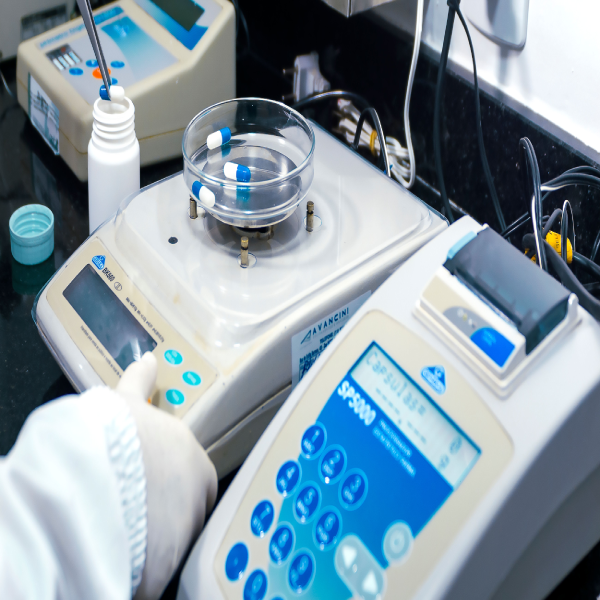
Single vs Dual-Station Tap Density Testers: Choose the Right Configuration for Your Lab
Buying a tap density tester is not simply a choice between one station and two. The right purchase must also match your test method, sample containers, daily workload and reporting requirements. An extra station is useful only when the proposed configuration supports the work your laboratory needs to perform.
Gemicatech lists Copley JVi tap density testing systems with one- or two-station configurations, touchscreen operation and integrated density calculations. This buying guide helps you compare the available options and prepare a clear specification before requesting a quotation in Egypt.
Which Tap Density Tester Configuration Should You Buy?
Consider a single-station configuration when testing is performed sequentially and one station can meet your required turnaround time. Consider a dual-station configuration when parallel sample testing would meaningfully support your workload, subject to the operating capabilities of the proposed system.
Before making that decision, confirm the exact model, supported test method, cylinder arrangement and station operation. Two stations should not automatically be interpreted as two fully independent testing systems.
Single-Station vs Dual-Station Tap Density Testers
Start with the number of samples arriving each day and the time available to complete them. Include preparation, weighing, volume readings, cleaning and result review. The tapping cycle is only one part of the complete workflow.
| Buying Consideration | Single-Station Configuration | Dual-Station Configuration |
|---|---|---|
| Sample workflow | Suitable to evaluate when samples can be processed sequentially. | Suitable to evaluate when parallel sample positions would support the workload. |
| Daily demand | Consider whether one station meets routine and peak demand. | Consider whether the additional station will be used regularly. |
| Method compatibility | Must be confirmed for the exact model and accessories. | Must be confirmed for the exact model and accessories. |
| Operating flexibility | Review the available settings and supported procedure. | Ask whether stations share settings and which combinations can operate together. |
| Purchase decision | Choose when the configuration meets the required scope without unnecessary capacity. | Choose when the confirmed capabilities justify the additional investment. |
Do not assume that a second station will double laboratory throughput. The benefit depends on whether preparation, weighing, volume reading or documentation is already the main bottleneck.
When One Station May Be Enough
- Samples arrive in manageable batches.
- Sequential testing meets the required reporting time.
- The laboratory is establishing an initial testing capability.
- The proposed single-station setup supports all required methods and vessel arrangements.
When Two Stations Are Worth Evaluating
- Multiple samples regularly need testing within the same period.
- The laboratory compares formulations or incoming material batches.
- The supplier confirms that the station arrangement supports the intended parallel workflow.
- Future workload is reasonably defined rather than based only on a possible expansion.
Copley JVi Tap Density Testers Available Through Gemicatech
The JVi tapped density tester product page describes systems for powders, granules and similar materials. The published range includes touchscreen control, adjustable tapping frequency and integrated calculations for commonly reported density-related results.
| Specification | Information Listed by Gemicatech | What to Confirm Before Ordering |
|---|---|---|
| Station configurations | One or two test stations. | Station count and operating arrangement for the quoted model. |
| JV 100i method support | Methods 1, 2 and 3. | Required accessories and configuration for the selected method. |
| JV 200i method support | Methods 2 and 3. | Compatibility with the laboratory’s approved procedure. |
| Tapping frequency | Adjustable from 50 to 300 taps per minute. | Required method setting and current manufacturer specification. |
| User interface | Touchscreen control. | Method setup, operator workflow and available software functions. |
| Integrated calculations | Bulk density, tapped density, Hausner Ratio and compressibility index. | Required data entry, calculation workflow and report content. |
| Reporting | Data reporting output options. | Included interfaces, formats and any optional components. |
| Automation | Options for automation and remote control. | Included versus optional hardware, software and services. |
The page also lists dimensions of 260 × 347 × 562 mm with a 250 mL cylinder. Confirm the footprint and operating clearance for the exact configuration before allocating bench space.
These specifications help create a shortlist. The final purchase should be based on the current technical data sheet, approved test method and written quotation.
Choose the Required Method Before Choosing the Model
A model with more capacity is not necessarily the right instrument if it does not support your procedure. Gemicatech’s listing identifies different method support for JV 100i and JV 200i, making this a key purchasing check.
If Method 1 is required, the published listing points to JV 100i for evaluation. If Method 2 or Method 3 is required, compare the appropriate configurations with the supplier and confirm the accessories needed to perform the test.
Do not select a model solely because its description mentions USP or Ph. Eur. Send the applicable chapter, method number or approved SOP so the proposed equipment can be checked against the actual requirement.
Confirm the Complete Test Arrangement
- The exact instrument model and station count.
- The method-specific tapping arrangement.
- Required cylinders, vessels, holders and accessories.
- The specified sample quantity and volume-reading procedure.
- The operating settings and endpoint requirements.
- The documentation needed before routine use.
An adjustable frequency range offers flexibility, but it does not make every setting suitable for a standardized test. The approved method determines the operating conditions.
Buy the Reporting Capability Your Laboratory Actually Needs
Integrated calculations can simplify routine work, but the system still needs reliable input data. Ask the supplier to demonstrate how sample mass, initial volume and final volume are entered or transferred in the proposed setup.
Confirm whether the report contains the sample identification, method, test settings, results and information required by your laboratory. A general statement about reporting does not establish that every desired feature is included.
Questions for a Product Demonstration
- How does the operator create and start a test?
- How are readings entered and checked?
- Which calculations appear in the result?
- How is the report reviewed, printed or exported?
- Which functions require optional software or accessories?
- What changes when automation or remote control is added?
If your quality system requires user permissions, audit trails or specific electronic records, list those requirements explicitly. Do not assume they are included because the instrument has a touchscreen.
Do You Need Tapped Density Testing or Broader Powder Flow Analysis?
Before requesting a quotation, explain the production or QC question behind the purchase. Routine tapped-density measurement is a different requirement from investigating hopper blockages or inconsistent discharge.
For routine powder packing measurements and density-related calculations, the JVi range is a relevant system to evaluate. For broader powder handling investigations, Gemicatech also presents Brookfield powder flow testing solutions.
Review the existing Brookfield powder flow testing solutions guide when the requirement includes flow behaviour under consolidation, wall friction or hopper-related questions.
This distinction prevents a common purchasing mistake: buying a correctly functioning instrument that measures a different property from the one needed to solve the problem.
Include Tap Density Testing in a Coordinated Pharmaceutical QC Plan
If you are equipping a laboratory for both powders and finished tablets, prepare one coordinated specification while keeping each test requirement separate.
Tap density testing supports powder characterization. Finished tablets may require different instruments for mechanical strength, abrasion resistance, disintegration or drug release, according to the approved product methods.
The pharmaceutical tablet and powder testing equipment guide provides an overview of the wider equipment scope.
Where relevant to your product range, you can also review the tablet hardness tester and tablet friability tester . Include these in a combined request only when the laboratory genuinely needs those tests.
Compare the Complete Package, Not Only the Instrument Price
A useful commercial comparison should identify what the laboratory will receive and what remains its responsibility. Two prices are not directly comparable if one includes the required accessories and support while the other covers only the base unit.
| Quotation Item | What the Buyer Should Check |
|---|---|
| Instrument | Exact model, configuration and station count. |
| Accessories | Included vessels, cylinders, holders and method-specific parts. |
| Software and reporting | Standard functions, optional licences and output arrangements. |
| Implementation | Delivery, installation and operator training scope. |
| Documentation | Manuals, certificates and available qualification documentation. |
| Ongoing support | Warranty terms, service arrangements and spare-parts support. |
| Commercial terms | Price, taxes, delivery terms, validity and confirmed lead time. |
Discuss your support requirements using Gemicatech’s laboratory equipment after-sales service information . Confirm the services included for the specific equipment and project rather than assuming every service is standard.
Request a Tap Density Tester Quote Matched to Your Workload
To receive a focused proposal, send a short application brief instead of asking only for “the price of a tap density tester.”
- Material: powder, granules or other sample type.
- Test requirement: applicable standard, chapter and method.
- Workload: typical and peak number of samples per day.
- Configuration: one or two stations, or a request for a recommendation.
- Sample arrangement: expected mass, volume and vessel requirements.
- Records: calculations, reporting and data-transfer needs.
- Support: installation, training and documentation requirements.
- Location and schedule: laboratory address and intended purchase timeline.
Gemicatech can use these details to discuss the proposed configuration and prepare a technical and commercial offer. Availability, delivery timing and final scope should be confirmed in the quotation.
Frequently Asked Purchasing Questions
Should I buy a single- or dual-station tap density tester?
Choose according to method compatibility and actual workload. One station may be sufficient for sequential testing. Two stations are worth evaluating when the confirmed operating arrangement supports useful parallel testing.
Does a dual-station system always double testing capacity?
No. Throughput depends on preparation, station operation, weighing, volume readings and reporting. Ask how the proposed system operates before calculating the benefit.
Which listed JVi model supports Method 1?
Gemicatech’s published specifications list JV 100i for Methods 1, 2 and 3. JV 200i is listed for Methods 2 and 3. Confirm current specifications and required accessories against your approved method.
Are Hausner Ratio and compressibility calculations included?
The JVi product listing includes integrated calculations for bulk density, tapped density, Hausner Ratio and compressibility index. Confirm the input workflow and report content for the quoted configuration.
Can I request automation or remote control?
Gemicatech’s product page lists automation and remote-control options. Ask which hardware, software and services are needed and whether they are included in the offer.
What is the price of a tap density tester in Egypt?
Request a current quotation for the exact model, station arrangement, accessories and support package. A generic price may not include everything required to perform your method.
Can I request several pharmaceutical testing instruments together?
Yes. Send a consolidated list covering the required tests, sample types and workload. Ask for an itemized proposal so each instrument and service remains clear.
Choose the Configuration That Fits the Work, Not Just the Budget
The right purchase is a system your team can use for the required method, at the required capacity, with clear reporting and an agreed support scope.
Share your method and workload with Gemicatech to compare suitable JVi configurations and request a written quotation covering the instrument, accessories and implementation requirements.