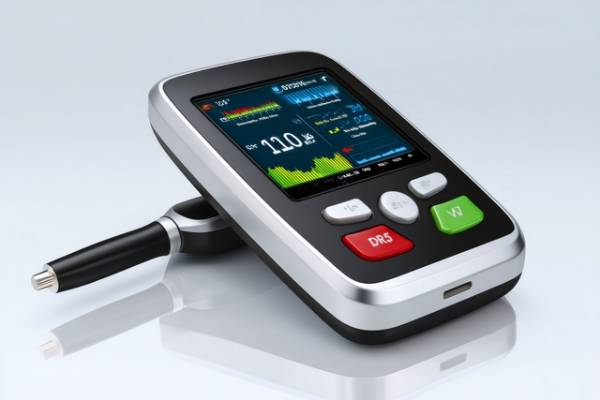
Measure refractive index, Brix, optical rotation, concentration and liquid density with professional laboratory instruments from Gemicatech.
These analytical instruments support pharmaceutical QC, food and beverage testing, sugar laboratories, fragrance and flavor production, chemical analysis, oil and gas laboratories and research applications across Egypt.
Looking for the right analytical instrument?
Tell us your sample type, required measurement, expected range and industry. Our team can help you choose the suitable instrument through the Contact page or WhatsApp.
Request a Quote Talk to an Expert Free ConsultationWhat are these laboratory instruments?
Refractometers, Polarimeters and Liquid Density Meters measure different physical properties of liquids and solutions. Together, they can support product identification, concentration measurement, purity checks, quality control and process monitoring.
Refractive Index
Measure how light behaves when it passes through a liquid or solution.
Optical Rotation
Measure the rotation produced by optically active or chiral substances.
Liquid Density
Measure density or specific gravity for quality control and product characterization.
Refractometers in Egypt
A Refractometer measures the refractive index of a sample. Because refractive index can be related to concentration, digital refractometers may display readings in scales such as Brix or other application-specific units.
Digital Refractometers are used when laboratories need fast, repeatable and easy-to-read measurements for liquids, solutions, syrups, oils, beverages, chemicals and pharmaceutical samples.
Common refractometer applications
- Brix measurement: Sugar concentration in juice, syrup, beverages and food products.
- Refractive index: Identification and characterization of liquids.
- Concentration control: Monitoring selected solutions during production.
- Purity investigation: Supporting quality checks for suitable chemical and pharmaceutical samples.
- Food and beverage QC: Comparing raw materials and finished products.
- Research and development: Evaluating formulation changes and sample composition.
Polarimeters in Egypt
A Polarimeter measures the rotation of plane-polarized light as it passes through an optically active substance. This measurement can support the determination of optical rotation, concentration or purity when the sample and method are suitable.
Polarimeters are especially relevant to sugar, food, pharmaceutical, chemical, biochemical and research laboratories. The result can depend on sample concentration, path length, temperature, wavelength and other method conditions.
Common polarimeter applications
- Sugar analysis: Optical rotation and quality control for sugar-related products.
- Pharmaceutical QC: Testing selected optically active substances and formulations.
- Chemical analysis: Supporting identification and purity evaluation of suitable compounds.
- Food laboratories: Analysis of optically active ingredients and food products.
- Research laboratories: Measuring optical activity during development and investigation.
Liquid Density Meters in Egypt
A Liquid Density Meter measures the density or specific gravity of a liquid. Density data can help laboratories identify materials, compare batches, monitor concentration and evaluate product quality.
Density measurement is used across pharmaceutical, chemical, petrochemical, food, beverage, sugar, fragrance and flavor applications. The correct instrument depends on the density range, sample viscosity, temperature control, sample volume and required automation.
Common density meter applications
- Pharmaceutical liquids: Product characterization and batch comparison.
- Food and beverages: Density, concentration and quality measurements.
- Chemicals: Material identification and process monitoring.
- Oil and gas: Testing suitable petroleum and industrial liquids.
- Fragrance and flavor: Quality checks for liquid ingredients and finished products.
- Research and development: Comparing formulations and physical properties.
Refractometer vs. Polarimeter vs. Density Meter
| Instrument | Main Measurement | Common Outputs | Typical Industries |
|---|---|---|---|
| Refractometer | Refractive index | RI, Brix, concentration or application-specific scale | Food, beverage, sugar, pharmaceutical and chemical |
| Polarimeter | Optical rotation | Rotation angle, specific rotation or calculated concentration | Sugar, pharmaceutical, chemical and food |
| Liquid Density Meter | Liquid density or specific gravity | Density, specific gravity and temperature-related values | Pharmaceutical, chemical, petroleum, food and beverage |
Applications by industry
| Industry | Recommended Instruments | Typical Measurements | Quality Objective |
|---|---|---|---|
| Pharmaceuticals | Refractometers, polarimeters and density meters | RI, optical rotation, concentration and density | Raw material, formulation and batch quality checks |
| Sugar Industry | Refractometers and polarimeters | Brix, optical rotation and concentration | Process control and product quality |
| Food & Beverage | Refractometers, polarimeters and density meters | Sugar concentration, RI and density | Ingredient verification and finished-product consistency |
| Fragrance & Flavor | Refractometers and density meters | Refractive index, density and batch comparison | Raw material and formulation consistency |
| Chemical Laboratories | All three instrument categories | RI, optical rotation, density and concentration | Material identity and quality control |
| Oil & Gas | Refractometers, density meters and related analyzers | Density, RI and selected liquid properties | Product characterization and process support |
How to choose the right instrument
1. Start with the required measurement
Decide whether you need refractive index, Brix, optical rotation, density, specific gravity, concentration or another measurement. The measurement objective should determine the instrument category.
2. Check the sample type
Provide information about the sample’s viscosity, color, transparency, concentration, temperature and chemical compatibility. These factors may affect the suitable measurement principle and accessories.
3. Review temperature control
Temperature can influence optical and physical measurements. If your method requires a defined temperature, choose an instrument with suitable temperature control or compensation and verify the required operating range.
4. Consider sample volume
Some laboratories need only a small sample volume, while others require automated flow-through measurement or repeated testing. Confirm the required sample volume, cleaning procedure and measurement cell design.
5. Evaluate software and data handling
Digital instruments may offer method storage, result export, user management, automatic calculations and reporting. These features can be important for QC laboratories that need organized records and repeatable procedures.
6. Confirm calibration requirements
Ask about reference standards, calibration procedures, verification frequency and available technical support. The calibration plan should match your laboratory quality system and approved methods.
Important specifications to compare
| Specification | Why It Matters | What to Ask |
|---|---|---|
| Measurement Range | Defines which samples and concentrations can be tested. | Does the range cover your samples and expected results? |
| Accuracy and Repeatability | Important for QC decisions and batch comparison. | What performance is specified for your measurement range? |
| Temperature Control | Helps control temperature-related measurement variation. | Is there ATC, heating, cooling or external temperature control? |
| Sample Volume | Affects sample consumption and workflow speed. | What is the minimum volume and cell capacity? |
| Calibration | Supports reliable long-term measurements. | What standards and verification procedures are required? |
| Software and Reporting | Helps manage results and quality documentation. | Can results be stored, exported and reported? |
Refractometer testing for Brix and concentration
Brix Refractometers are commonly associated with sugar concentration measurements in food, beverages, syrups and related products. Depending on the model and scale, refractometers may also support other concentration units.
Always confirm that the selected scale, temperature conditions and calibration method match the product being tested. A Brix reading is not automatically suitable for every liquid or chemical sample.
Polarimeter testing for optical rotation
Polarimeters are used when the sample rotates polarized light. The measured rotation can be related to concentration or purity when the sample, wavelength, temperature, path length and method are properly defined.
This makes polarimeters useful in sugar, pharmaceutical, chemical, food and research laboratories. The final interpretation should always follow the laboratory’s approved method.
Density measurement for liquids
Liquid Density Meters help laboratories compare the density of liquids, monitor concentration and evaluate product consistency. They are relevant to pharmaceutical solutions, chemicals, oils, beverages, fragrances and industrial liquids.
When selecting a density meter, consider viscosity, temperature, sample cleanliness, required throughput, measurement cell, automation and cleaning requirements.
Calibration and maintenance
- Follow the manufacturer’s cleaning instructions after every relevant test.
- Use suitable reference standards for verification and calibration.
- Keep sample cells, prisms and optical surfaces clean.
- Control sample temperature according to the test method.
- Check for air bubbles, contamination and insufficient sample coverage.
- Record calibration, verification, maintenance and service activities.
- Use compatible cleaning materials to avoid damaging instrument components.
- Arrange professional service when readings become unstable or inconsistent.
Related laboratory solutions
Why choose Gemicatech?
Choosing a Refractometer, Polarimeter or Liquid Density Meter in Egypt requires matching the instrument to the sample, measurement, range, temperature and quality system. Gemicatech can help you review these requirements before requesting a quotation.
- Application-based instrument selection.
- Support for pharmaceutical, food, sugar, beverage, chemical and oil and gas laboratories.
- Guidance on measurement range, sample volume and temperature requirements.
- Support for calibration, software and data reporting questions.
- Quotation and after-sales coordination in Egypt.
Frequently Asked Questions
What is a laboratory refractometer used for?
A laboratory refractometer measures refractive index and may display concentration-related values such as Brix or other suitable scales, depending on the instrument and application.
What is a polarimeter used for?
A polarimeter measures optical rotation produced by an optically active substance and can support concentration, purity and quality control measurements.
What is a liquid density meter?
A liquid density meter measures the density or specific gravity of a liquid and can support material identification, batch comparison and product characterization.
What is the difference between a refractometer and a polarimeter?
A refractometer measures refractive index, while a polarimeter measures optical rotation caused by an optically active or chiral substance.
Can Gemicatech supply these instruments in Egypt?
Yes. Contact Gemicatech to discuss your sample, required measurement and laboratory application before requesting a quotation.
Choose the right analytical instrument
Tell us whether you need a refractometer, polarimeter, liquid density meter or a complete analytical testing solution. Get professional guidance and a quotation from Gemicatech.
Get the Best Price Contact on WhatsApp Visit Gemicatech