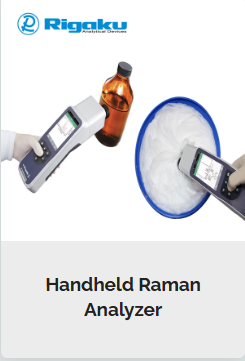
Speed up raw material identification, pharmaceutical quality control and chemical verification with a portable Handheld Raman Analyzer in Egypt.
Raman analyzers provide a fast way to screen and identify selected materials at the point of need, including laboratories, warehouses, receiving areas, production environments and quality control departments. Gemicatech helps Egyptian companies choose the right analyzer for their materials, packaging, workflow and documentation requirements.
Need a portable material identification solution?
Tell us what you need to identify, the type of packaging, your testing location and the number of daily samples. Request technical guidance through the Contact page or WhatsApp.
Request a Quote Talk to an Expert Free ConsultationWhat is a Handheld Raman Analyzer?
A Handheld Raman Analyzer is a portable spectroscopy instrument used to identify or verify materials by analyzing their molecular fingerprint. The device directs laser light toward a sample and measures the Raman response generated by the material.
The resulting spectrum can be compared with a reference library or approved material profile. This makes handheld Raman technology useful for fast screening, incoming material checks, raw material verification and selected quality control applications.
Portable Testing
Move the analyzer between the laboratory, warehouse, receiving area and production floor.
Rapid Identification
Support fast material verification when laboratory teams need an immediate screening decision.
Non-Destructive Approach
Analyze suitable samples with minimal handling, depending on the material and application.
Why use portable Raman spectroscopy in Egypt?
Many companies need to verify incoming materials before releasing them into production. Traditional laboratory testing may require sampling, transport, preparation and additional handling, while a portable Raman workflow can support rapid screening at the point of need.
- Faster incoming inspection: Check selected raw materials before they enter production.
- Reduced sample handling: Support identification with limited preparation in suitable applications.
- Warehouse verification: Test materials closer to their storage location.
- Improved material traceability: Link identification results to batches, containers or internal records.
- Support for quality decisions: Help teams identify materials that require acceptance, rejection or further laboratory investigation.
- Flexible operation: Use the analyzer in laboratories, factories, warehouses or receiving areas.
Applications of Handheld Raman Analyzers
| Industry | Typical Application | Business Value | Important Consideration |
|---|---|---|---|
| Pharmaceuticals | API, excipient and incoming raw material identification | Faster verification and improved material control | Reference library, packaging and documentation requirements |
| Chemicals | Identification of chemicals and unknown material screening | Rapid decision-making at the point of need | Sample safety, chemical compatibility and library coverage |
| Food and Beverage | Selected raw material and ingredient verification | Improved receiving and supplier verification workflows | Sample composition, packaging and approved method |
| Cosmetics | Ingredient and raw material verification | Faster screening of incoming materials | Material type, color, packaging and reference spectra |
| Industrial Materials | Material identity checks and field screening | Portable analysis without moving every sample | Surface condition, safety and application environment |
| Research Laboratories | Material characterization and sample comparison | Flexible testing during research and development | Required spectral range and analytical sensitivity |
Handheld Raman for pharmaceutical QC
Pharmaceutical manufacturers can use portable Raman analyzers to support raw material identity checks, incoming inspection and selected quality control procedures. The analyzer may be used near the receiving area or warehouse, depending on the approved workflow and the material being tested.
Raman spectroscopy is also associated with pharmaceutical applications such as raw material verification, purity assessment, formulation research and evaluation of certain solid-state or polymorphic characteristics. The exact capability depends on the analyzer, software, reference library, sample and validated method.
Raw material identification through packaging
Some portable Raman systems are designed to identify suitable materials through selected packaging. This may help reduce unnecessary opening, sampling or transfer of material in specific workflows.
However, performance depends on packaging thickness, color, opacity, material composition, sample distance, surface condition and analyzer configuration. Always confirm compatibility with the actual bags, bottles, drums or containers used by your company.
How to choose the right Raman analyzer
1. Define the material library
List the APIs, excipients, chemicals, ingredients or industrial materials you need to identify. The supplier should confirm whether the required substances are included in the available library or can be added through an appropriate process.
2. Check the testing environment
Decide whether the analyzer will be used in a laboratory, warehouse, receiving area, production zone or outdoor environment. Portability, durability, user interface, battery operation and cleaning requirements may differ according to the location.
3. Review packaging requirements
Tell the supplier whether materials are stored in transparent bags, opaque sacks, plastic drums, glass bottles, metal containers or other packaging. Packaging can affect the measurement and must be evaluated before purchase.
4. Evaluate software and reporting
Review the user interface, library management, user permissions, result storage, report generation, barcode support and data export options. These features become especially important when several operators use the same instrument.
5. Confirm safety requirements
Raman analyzers use laser illumination, so the instrument must be operated according to the manufacturer’s laser safety instructions. Also review the chemical safety of the material and the environment where the analyzer will be used.
6. Ask about training and support
A portable instrument is valuable only when operators know how to use it correctly. Ask about installation guidance, user training, method development, reference libraries, maintenance and after-sales support in Egypt.
Handheld Raman vs. traditional laboratory testing
| Factor | Handheld Raman Analyzer | Traditional Laboratory Analysis |
|---|---|---|
| Location | Laboratory, warehouse, receiving area or production floor | Usually performed in a dedicated laboratory |
| Sample handling | Minimal handling in suitable applications | May require sampling and preparation |
| Speed | Designed for rapid screening and identification | May require longer preparation and analysis time |
| Portability | High | Usually limited |
| Best use | Material identity verification and point-of-need screening | Detailed quantitative, confirmatory or specialized analysis |
A handheld Raman analyzer does not replace every laboratory method. It is best used as part of a broader quality system, with confirmatory testing performed when required by the approved procedure or material risk assessment.
Key specifications to compare
- Laser wavelength: Confirm compatibility with the materials and application.
- Spectral range: Review whether the range covers the substances you need to identify.
- Reference library: Check available compounds, library management and expansion options.
- Packaging compatibility: Confirm whether testing through the actual packaging is possible.
- Measurement time: Ask for realistic performance under your application conditions.
- Software: Review identification workflow, result confidence, reporting and user controls.
- Battery and portability: Important for warehouse and field operation.
- Safety and accessories: Confirm laser safety, probes, adapters, stands and protective options.
Applications in related industries
Handheld Raman technology can complement equipment used in several sectors already served by Gemicatech. Explore these related solutions:
Handheld Raman analyzer safety
- Follow the manufacturer’s laser safety instructions.
- Train all operators before using the analyzer.
- Do not point the laser toward people, eyes or reflective surfaces.
- Follow chemical handling and personal protective equipment requirements.
- Do not measure unknown substances without an approved safety procedure.
- Confirm whether the analyzer is suitable for the target material and environment.
- Keep the device, optics and accessories clean and protected.
Why choose Gemicatech in Egypt?
Choosing a Handheld Raman Analyzer in Egypt requires understanding the material, packaging, testing location, reference library and quality workflow. Gemicatech can help you review these requirements before requesting a quotation.
- Application-based equipment selection.
- Support for pharmaceutical, chemical, food and cosmetics laboratories.
- Guidance for raw material identification and incoming inspection workflows.
- Quotation support based on actual samples and packaging.
- Installation, training and after-sales coordination in Egypt.
Frequently Asked Questions
What is a handheld Raman analyzer?
It is a portable spectroscopy instrument that identifies or verifies suitable materials by analyzing their Raman spectral response.
What is a handheld Raman analyzer used for?
Common applications include raw material identification, pharmaceutical QC, chemical verification, incoming inspection and selected non-destructive material screening.
Can Raman identify materials through packaging?
Some systems can analyze selected materials through selected packaging types. Compatibility depends on the analyzer, packaging, sample, distance and measurement procedure.
Is Raman testing destructive?
Raman is generally considered a non-destructive analytical technique, but actual performance depends on the material, laser settings, measurement method and surface condition.
Can Gemicatech provide handheld Raman analyzers in Egypt?
Contact Gemicatech to discuss your material list, packaging, application and testing environment before requesting a quotation.
Identify materials faster with portable Raman
Send your material list, packaging details and testing requirements. Get professional guidance and a quotation for Handheld Raman Analyzers in Egypt.
Get the Best Price Contact on WhatsApp Visit Gemicatech