Dissolution vs Disintegration Testers: Which Do You Need?
A tablet can break apart quickly without releasing its active ingredient at the required rate. That distinction matters when you are choosing equipment for a pharmaceutical QC laboratory: a disintegration tester and a dissolution tester answer different questions.
The right purchase starts with your approved product methods, not with the assumption that one instrument can replace the other. Depending on the dosage form and specification, your laboratory may need one system or both.
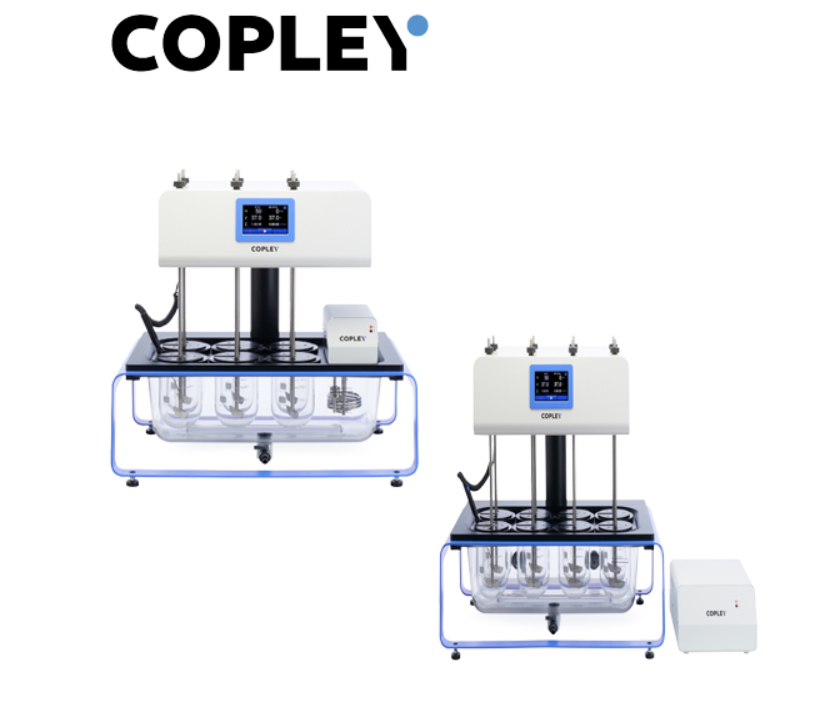
This guide compares the Copley DTGi disintegration testers and Copley DISi dissolution testers listed by Gemicatech. It explains the scientific difference, the available configurations and the questions to resolve before requesting a quotation in Egypt.
What Is the Difference Between Dissolution and Disintegration?
Disintegration testing assesses whether a dosage unit breaks apart under specified conditions and within the required time. It does not establish that the active ingredient has dissolved.
Dissolution testing measures the amount of active ingredient entering solution in a defined medium over specified time points. It combines controlled apparatus conditions with an appropriate analytical determination of the released drug.
In simple purchasing terms: choose equipment for the test your product method requires. If the specification includes both tests, plan for both capabilities unless an appropriately justified and approved alternative applies.
Not Sure Which System Your Method Requires?
Send Gemicatech your dosage form, method reference, expected sample workload and reporting requirements. Request a technical comparison before deciding on the model or number of stations.
Request a Dissolution and Disintegration Equipment Recommendation
Dissolution vs Disintegration: A Practical Comparison
| Comparison Point | Disintegration Testing | Dissolution Testing |
|---|---|---|
| Main question | Does the dosage unit break apart as required? | How much active ingredient enters solution within the specified period? |
| Typical result | Compliance with a defined disintegration endpoint and time limit. | Drug amount or percentage dissolved at specified time points, or a dissolution profile. |
| Core equipment | Basket-rack assembly operating in a controlled test medium. | Method-specific dissolution apparatus with controlled agitation and temperature. |
| Analytical determination | Usually assessment of the specified physical endpoint. | Appropriate drug measurement, such as a validated UV or chromatographic procedure where applicable. |
| Relevant USP references | USP <701>; other chapters may apply to particular products. | USP <711> and, for applicable drug-release methods, USP <724>. |
| Gemicatech equipment range | Copley DTGi Series. | Copley DISi Series. |
Exact conditions and acceptance criteria come from the applicable current method, product specification and approved laboratory procedure. There is no universal time limit or percentage suitable for every tablet or capsule.
Does Passing Disintegration Mean a Tablet Will Pass Dissolution?
No. Disintegration establishes a physical breakup endpoint, not complete dissolution of the dosage unit or its active ingredient. After a tablet breaks apart, the drug must still dissolve into the surrounding medium.
Dissolution can be influenced by drug solubility, particle properties, formulation, manufacturing conditions and the test environment. A product may therefore disintegrate within its specified time but fail to achieve the required dissolved amount.
Can Disintegration Ever Replace Dissolution?
In specific circumstances, an alternative control strategy may be scientifically justified and accepted for a particular product. That is a product-specific regulatory and quality decision, not a general rule for equipment purchasing.
Do not remove dissolution capability from your purchasing plan solely because a formulation breaks apart quickly. Confirm the approved control strategy with the responsible quality and regulatory teams.
Copley DTGi Disintegration Testers: Compare the Available Models
Gemicatech lists the DTGi range for pharmaceutical R&D and quality-control applications, including appropriate testing configurations for different tablet and capsule types. The product page references Ph. Eur. 2.9.1 and USP <701> and <2040>.
The range includes one to four test stations, with an explicitly identified independent two-station model, DTG-200i IS. Confirm independent-control capability for the exact configuration being quoted.
| Model | Test Stations | Listed Standard Capacity | Selection Consideration |
|---|---|---|---|
| DTG-100i | 1 | Up to 6 units | Evaluate for a workflow that can be served by one station. |
| DTG-200i | 2 | Up to 12 units | Evaluate against the required workload and station operation. |
| DTG-200i IS | 2 | Up to 12 units | Listed as the independent two-station configuration. |
| DTG-300i | 3 | Up to 18 units | Consider when additional station capacity is justified. |
| DTG-400i | 4 | Up to 24 units | Consider for a larger planned testing workload. |
These capacities refer to the standard arrangement listed. Alternative basket assemblies can change the number and size of units accommodated.
DTGi Features to Review in the Technical Offer
- Integrated temperature control and measurement.
- Single-point electronic temperature calibration.
- Adjustable stroke frequency.
- RS232, USB A and USB B reporting connections.
- Available automation and remote-control options.
- Model-specific station control and accessories.
Adjustable settings support different applications, but standardized testing must use the conditions required by the approved method. An available setting is not automatically an acceptable pharmacopoeial setting.
Do You Test Large Tablets or Gelatine Capsules?
Gemicatech lists optional covered basket-rack assemblies for applicable hard- and soft-gelatine capsule testing. A separate large-unit assembly replaces the six standard tubes with three larger tubes of 33 mm diameter.
Include dosage-unit dimensions and capsule type in the enquiry. This helps prevent a quotation for the base instrument without the basket arrangement your method requires.
Copley DISi Dissolution Testers: Six or Eight Vessels?
Gemicatech lists two main DISi configurations: the DIS 600i with six stirred vessels and the DIS 800i with eight. Both listings reference support for apparatus configurations 1, 2, 5 and 6, with the appropriate accessories.
These correspond to basket, paddle, paddle-over-disk and rotating-cylinder arrangements. Do not assume that every accessory is supplied with the base instrument. Ask the supplier to identify the apparatus included for your selected method.
| Specification | DIS 600i | DIS 800i |
|---|---|---|
| Stirred vessels | 6 | 8 |
| Main unit dimensions | 728 × 495 × 689 mm | 728 × 495 × 689 mm |
| External heater dimensions | 260 × 330 × 150 mm | 260 × 330 × 150 mm |
| Heating arrangement | External digital heater/circulator. | External digital heater/circulator. |
| Listed reporting connections | RS232, USB A and USB B. | RS232, USB A and USB B. |
More vessels do not automatically mean a higher valid sample count for every procedure. Define how each vessel will be used and confirm the method, sampling arrangement and operator workflow.
Useful DISi Features and Options
The product page lists touchscreen control, integrated temperature measurement and an external low-vibration heater/circulator. It also describes individually operated basket or paddle clutches, vessel-centering features and low-evaporation lids.
Available options include UV-resistant vessels, automatic tablet introduction, manual or automated sampling probes, and automation or remote-control arrangements. Confirm which are standard and which are additional.
The Dissolution Bath Is Not the Complete Analytical System
Dissolution apparatus controls the physical test conditions. Determining the amount of drug dissolved may also require sample withdrawal, suitable filtration, dilution and a validated analytical procedure.
A UV spectrophotometer or chromatographic system may be required, depending on the method. Include that downstream workflow when calculating budget, space and turnaround time.
Automated sampling can support workload management, but filter suitability, sample timing, transfer paths and volume replacement still need appropriate assessment. Automation does not remove method responsibilities.
How to Choose the Right Equipment Package for Your Laboratory
1. Start With the Product and Approved Method
Identify the dosage forms, current method references, test conditions and acceptance criteria. Immediate-release, delayed-release and other formulations may require different procedures and accessories.
2. Calculate the Real Testing Workload
Count samples, repeat stages where applicable, preparation time, cleaning and result review. Use peak demand as well as the daily average when evaluating station or vessel capacity.
3. Specify the Accessories
For disintegration, confirm basket assemblies, unit dimensions and any required discs. For dissolution, confirm the apparatus, vessels, lids, sampling equipment and analytical requirements.
4. Plan Installation and Equipment Readiness
Check bench space, utilities, service access and the qualification or verification activities required by your quality system. An equipment compliance statement does not replace installation checks or routine control.
5. Confirm Documentation and Service Scope
Ask what is included for installation, operator training, certificates, documentation and ongoing support. Review Gemicatech’s laboratory equipment after-sales support and have project-specific deliverables confirmed in writing.
Compare Complete Quotations, Not Just Instrument Prices
| Quotation Item | What to Confirm |
|---|---|
| Model and capacity | Exact DTGi or DISi configuration and operating capabilities. |
| Method accessories | Baskets, paddles, vessels, capsule assemblies and other required parts. |
| Sampling and analysis | Manual or automated sampling, filters and downstream analytical needs. |
| Software and reporting | Included functions, interfaces and optional licences. |
| Implementation | Delivery, installation, training and agreed qualification support. |
| Commercial terms | Current price, taxes, warranty, delivery terms and lead time. |
There is no reliable universal package price for every laboratory. A method-matched quotation is more useful than a base-unit price that excludes essential accessories.
Request an Itemized DTGi or DISi Technical and Commercial Offer
Building a Wider Tablet Testing Laboratory?
Dissolution and disintegration are part of a wider quality programme. Depending on the product, the laboratory may also need breaking-force, friability, assay and other testing capabilities.
Use the existing pharmaceutical tablet testing equipment guide to review the broader scope. Where required, compare the tablet hardness tester and tablet friability tester separately against their own test requirements.
Combining the purchasing request can simplify project coordination, but each instrument should remain individually specified and justified.
Frequently Asked Questions
Is a dissolution tester the same as a disintegration tester?
No. A disintegration tester assesses physical breakup under defined conditions. A dissolution tester supports measurement of drug entering solution over specified times.
Which device should a tablet QC laboratory buy first?
Follow the approved testing scope. If both tests are required for the products being released, the laboratory needs access to both capabilities rather than choosing one solely on price.
Can the DTGi range test capsules?
Gemicatech lists capsule-testing options, including covered basket assemblies for applicable hard- and soft-gelatine capsule methods. Confirm the exact assembly and procedure before ordering.
Which DTGi model has independent station control?
The DTG-200i IS is explicitly listed as an independent two-station model. Ask for confirmation of control capabilities for any other proposed configuration.
What is the difference between DIS 600i and DIS 800i?
The published specifications list six stirred vessels for DIS 600i and eight for DIS 800i. Confirm the complete apparatus and sampling package against the intended workload.
Does a dissolution tester directly measure drug concentration?
The apparatus provides controlled dissolution conditions. Drug determination requires an appropriate analytical procedure, which may involve separate or integrated analytical equipment depending on the configuration.
Is automated sampling included as standard?
Do not assume so. Gemicatech lists sampling and automation options; request a clear distinction between standard equipment and optional components in the quotation.
Can dissolution results predict the exact in-vivo response?
Not automatically. Dissolution is an in-vitro performance test. Relationships with in-vivo behaviour require appropriate scientific evidence and are product-specific.
What information is needed for an accurate quotation?
Provide the dosage form, method, workload, required station or vessel capacity, accessories, sampling approach, documentation and installation location.
Request the Right Tester for Your Product Portfolio
Whether you need one disintegration station, a larger DTGi configuration, or a six- or eight-vessel dissolution system, start with the method and the work your team needs to complete.
Share your requirements with Gemicatech to request a model-specific proposal covering equipment, accessories and agreed technical support. Confirm current availability and delivery timing in the written offer.