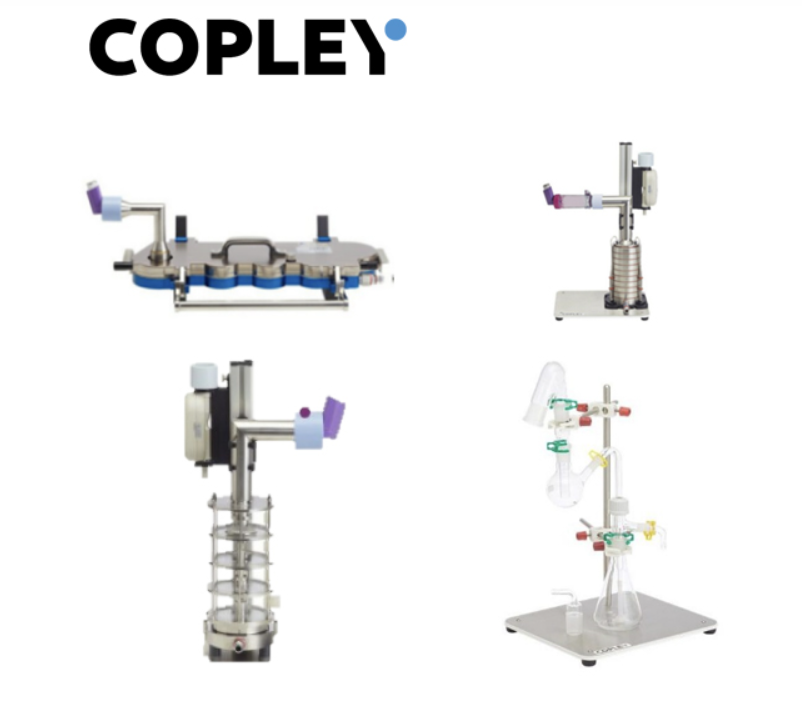
DDU vs APSD: Choose Your Inhaler Testing System
Two inhaler tests can use similar airflow equipment and still answer very different questions. One measures whether the product delivers a consistent dose. The other measures how the emitted aerosol is distributed across aerodynamic particle sizes.
Choosing between them is not only a laboratory preference. It affects the sampling apparatus, vacuum pump, flow-control equipment, mouthpiece adaptors, collection components and analytical workload.
This guide compares delivered dose uniformity testing and aerodynamic particle size distribution testing, then explains how to specify a complete system around Gemicatech’s DUSA inhaler test system and aerodynamic particle size distribution systems .
What Is the Difference Between DDU and APSD?
Delivered dose uniformity, or DDU, evaluates the amount of drug delivered by an inhaler. It is concerned with dose delivery and consistency.
Aerodynamic particle size distribution, or APSD, evaluates how the emitted drug is distributed by aerodynamic particle size. A cascade impactor separates the sample according to particle inertia, which depends on velocity and aerodynamic particle size.
DDU tells you how much drug is delivered. APSD tells you how that delivered aerosol is distributed across particle-size stages. They are related, but they are not interchangeable tests.
Planning Inhaler Testing Equipment?
Send Gemicatech your dosage form, device type, test objective, expected daily workload and required accessories. Request a complete configuration rather than a quotation for the sampling apparatus alone.
DDU vs APSD at a Glance
| Selection Factor | DDU | APSD |
|---|---|---|
| Main question | How much drug does the inhaler deliver? | How is the emitted aerosol distributed by aerodynamic particle size? |
| Primary apparatus | DUSA sampling apparatus. | Cascade impactor system. |
| Typical output | Delivered dose and dose-uniformity results. | Drug distribution across impactor stages and related APSD metrics. |
| Sampling complexity | Usually simpler than APSD because the collection arrangement is less elaborate. | More complex because the sample is separated across multiple stages. |
| Analytical workload | Determination of the collected dose. | Recovery and determination from multiple impactor components. |
| Equipment implication | Specify DUSA type, vacuum source, flow control and device adaptor. | Specify impactor, pre-separator, expansion chamber, flow control and recovery workflow. |
A laboratory may need both systems when it must evaluate dose delivery and particle-size distribution. Do not assume that a DDU result provides APSD information, or that an APSD profile replaces delivered-dose testing.
Which Test Does Your Laboratory Need?
Choose DDU When Dose Delivery Is the Main Requirement
DDU testing is appropriate when the laboratory needs to assess the amount of drug delivered by an inhaler. Depending on the product and method, it may support development, quality control or comparative assessment.
The test requires a defined sampling arrangement, airflow conditions and collection procedure. The result depends on the complete system, not only on the DUSA component.
Choose APSD When Particle-Size Distribution Is Required
APSD testing is appropriate when the laboratory needs to understand the aerodynamic particle-size distribution of the emitted aerosol. Cascade impactors are widely used for this purpose because they separate particles based on inertia.
APSD work requires careful control of flow, stage preparation, sample recovery and analytical determination. It is generally more labour-intensive than a DDU test.
Do You Need Both?
Many inhaler-development programmes require both dose-delivery and APSD information. If both are planned, identify which components can be shared and which must be specified separately.
Shared equipment can improve efficiency. It does not remove the need to verify that each configuration meets its intended method and performance requirements.
DUSA: The System for DDU Testing
Gemicatech lists DUSA apparatus for delivered dose uniformity testing of metered dose inhalers, aqueous droplet inhalers, nasal aerosols, dry powder inhalers and nasal powders. The appropriate DUSA configuration depends on the dosage form and device being tested.
| Item | Published Information | What to Confirm |
|---|---|---|
| Test purpose | DDU testing. | Approved method and product-specific requirements. |
| Dosage forms | MDIs, aqueous droplet inhalers, nasal aerosols, DPIs and nasal powders. | Exact DUSA configuration for your device. |
| Core system components | Vacuum pump, breath actuation controller, flow meter, critical flow controller and mouthpiece adaptors. | Models, flow range and compatibility with the tested inhaler. |
| Workstation | Inhaler workstation. | Whether it is included or quoted separately. |
| Optional accessories | Shaker, collection-tube stand, temperature and humidity sensor, footswitch, waste collector, filter holder with spacer and glass fibre filters. | Which accessories are required by your procedure. |
A DUSA quotation should identify the dosage form, device type, required flow conditions and the complete list of accessories. A DUSA unit alone may not constitute a complete test system.
APSD: The System for Particle-Size Distribution
Gemicatech lists aerodynamic particle size distribution systems based on cascade impactors. These systems separate an emitted sample according to particle inertia, without requiring knowledge of particle density or shape.
APSD testing is more component-intensive than DDU testing. The impactor arrangement, pre-separator, expansion chamber, flow-control equipment and recovery workflow all need to be specified together.
| Item | Published Information | What to Confirm |
|---|---|---|
| Test purpose | Aerodynamic particle size distribution measurement. | Required APSD method and acceptance criteria. |
| Core principle | Cascade impaction separates particles based on inertia, which is a function of velocity and aerodynamic particle size. | Required impactor configuration and stage setup. |
| Core system components | Vacuum pump, breath actuation controller, flow meter, critical flow controller, mouthpiece adaptors and pre-separator. | Application-specific model selection. |
| Chambers | Glass expansion chambers in different sizes. | Required chamber size for the device and method. |
| Documentation | IQOQPQ documentation by authorised technical personnel. | Scope, timing and whether it is included in the offer. |
| Optional accessories | Gentle rocker, automated drug recovery, sample preparation unit, NGI assistant, NGI cup coater, NGI cooler, impactor cleaning system, temperature and humidity sensor, actuation sensor or footswitch, and calibration kit. | Which options support your workload and recovery procedure. |
For high-throughput APSD work, discuss automated drug recovery, sample preparation and cleaning options. These accessories can reduce manual handling, but they should be selected against the actual method and workload.
Flow Control Is Not an Optional Detail
Both systems rely on controlled airflow. The vacuum pump creates the required flow, while the flow meter and critical flow controller help establish and verify the required conditions.
Do not select these items only by price. Confirm the required flow range, compatibility with the sampling apparatus or impactor, and the verification approach used in your method.
Breath actuation and mouthpiece adaptors also affect how the device is operated and connected. Specify the actual inhaler or nasal device rather than requesting generic accessories.
Plan Recovery and Analysis Before Buying
The inhaler testing system collects the sample; it does not independently determine the drug content. A suitable analytical method is required to quantify the drug recovered from the DUSA collection component or from the impactor stages.
APSD usually creates a larger analytical workload because drug must be recovered from multiple impactor components. Plan the recovery solvents, extraction procedure, sample handling and analytical capacity before finalising the equipment package.
- Define the number of actuations or emissions per test.
- Define the number of replicates required.
- Plan recovery from every relevant collection component.
- Assess sample stability and filtration requirements.
- Confirm the analytical method sensitivity and throughput.
- Define how results will be calculated and reported.
Automated recovery can be useful for APSD workflows, but it introduces equipment that must be evaluated for recovery, carryover, compatibility and operating procedure.
What Should a DDU or APSD Quotation Include?
| Quotation Item | Information to Request |
|---|---|
| Study scope | DDU, APSD or both, with the intended method reference. |
| Dosage form | MDI, DPI, aqueous droplet inhaler, nasal aerosol or nasal powder. |
| Main apparatus | DUSA type or cascade impactor configuration. |
| Airflow components | Vacuum pump, flow meter, critical flow controller and breath actuation controller. |
| Device connection | Mouthpiece adaptors and any required workstation. |
| APSD components | Pre-separator, expansion chamber and impactor accessories. |
| Workflow options | Recovery, cleaning, sample preparation and calibration accessories. |
| Documentation and service | Manuals, IQOQPQ scope, installation, training and support. |
| Commercial conditions | Current price, taxes, warranty, delivery terms and confirmed lead time. |
Share the dosage form, device type, test objective and expected workload with Gemicatech. Where the method is still being developed, explain which requirements remain undecided.
Keep Inhaler Testing Separate From Other Dosage-Form Tests
Inhaler testing evaluates emitted dose and aerosol behaviour. It does not replace tests that assess other dosage-form characteristics.
If the laboratory also works with powders, review the tap density tester separately for bulk and tapped density requirements. For the wider pharmaceutical portfolio, read the pharmaceutical testing equipment guide .
For implementation and ongoing assistance, review Gemicatech’s laboratory equipment support information . Confirm the project-specific service scope in writing.
Frequently Asked Questions
Are DDU and APSD the same test?
No. DDU evaluates delivered dose uniformity. APSD evaluates the aerodynamic particle-size distribution of the emitted aerosol.
Can one system perform both DDU and APSD?
Some components may be shared, such as vacuum generation, flow measurement, flow control and certain adaptors. The DUSA and cascade impactor arrangements remain different test configurations.
Does DUSA work with DPIs?
Yes. Gemicatech lists a DUSA configuration for DPIs and nasal powders, in addition to configurations for MDIs, aqueous droplet inhalers and nasal aerosols.
Is a vacuum pump included with DUSA?
Do not assume so. The product page lists the vacuum pump as an item required to complete the test system, with various models available. Confirm the exact model and whether it is included in the quotation.
Why does APSD need a pre-separator?
A pre-separator is listed as an application-dependent component of the APSD system. Its need depends on the product, device and method; confirm it with the proposed test configuration.
Is automated drug recovery necessary?
No. It is listed as an optional APSD accessory. It may be useful for higher workloads, but it should be selected according to the method, throughput and budget.
Does the APSD system include IQOQPQ documentation?
Gemicatech lists IQOQPQ documentation work by authorised technical personnel. Confirm the exact scope, timing and commercial treatment in the quotation.
How much does a DDU or APSD system cost in Egypt?
Request a current quotation covering the main apparatus, airflow components, adaptors, accessories and support. A base-unit price may exclude components required to complete the test system.
Specify the Test First. Buy the Right Configuration Second.
A useful inhaler-testing purchase starts with a clear question: dose delivery, particle-size distribution, or both. Once that is established, the DUSA or cascade impactor configuration and supporting components can be specified with greater confidence.
Send Gemicatech your dosage form, device type, method and workload requirements to discuss a complete DDU or APSD configuration and request a written technical and commercial offer.